
3-Axis, 5-Axis or Mill-Turn: Which Machine Does Your Part Need?
Buyer Guides · 9 November 2026
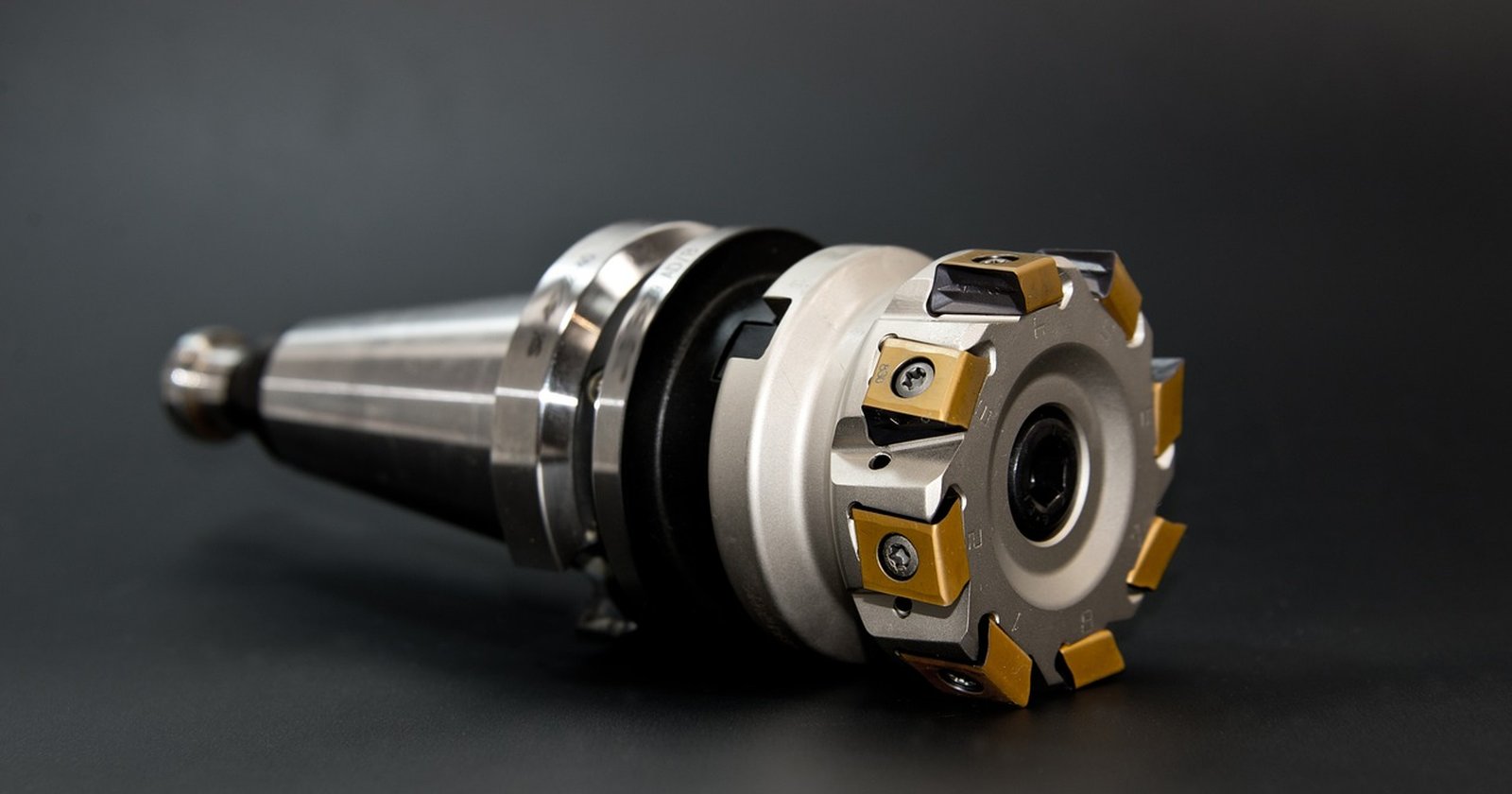
Two shops can quote the same drawing on different machines, and the machine they choose shapes the price. A part that needs five separate clampings on a 3-axis mill might come off a 5-axis machine in one or two. A turned part with cross holes might need a lathe and a mill, or a single mill-turn centre. This guide matches common part shapes to the machining routes that suit them, explains why set-ups drive cost, and lists what to send so suppliers can quote the right route.
Start with the part, not the machine
Ask three questions. Is the part mostly round or mostly prismatic (block-shaped)? How many faces carry features? Are there angled holes, undercuts or curved surfaces that a straight-down cutter cannot reach? The answers point to the right route.
3-axis milling: prismatic parts machined from one direction at a time
A 3-axis mill moves the cutter in X, Y and Z, always approaching from above. It suits plates, brackets, covers, manifolds and housings whose features sit on one or two faces. Each extra face usually means turning the part over and clamping it again. For simple parts that is no problem, and 3-axis machine time is often the lowest-cost time in the shop.
3+2 machining: several faces in one clamping
On a 3+2 (or positional five-axis) machine, the two rotary axes tilt the part or the head to a fixed angle and lock, and the cut itself is ordinary 3-axis work. The machine then indexes to the next angle. This reaches five sides of a block and angled holes without re-clamping, which suits housings, valve bodies and parts with features on several faces. Many shops use 3+2 for most of their five-axis work.
Simultaneous 5-axis: curved surfaces and hard-to-reach features
In simultaneous 5-axis machining, all five axes move during the cut, so the tool stays at the best angle to a curved surface. It suits impellers, blades, ports, moulds and freeform shapes, and lets the shop use shorter, stiffer tools on deep features. Programming takes longer and the machine rate is usually higher, so it pays off when the geometry needs it.
Turning: round parts
A lathe spins the material and a fixed tool cuts it, which makes it the natural route for shafts, pins, bushes, spacers and threaded parts. Diameters, faces, grooves and threads on a common axis are all lathe work.
Mill-turn: round parts with milled features
A mill-turn centre is a lathe with driven (live) tools, and often a Y axis and a second spindle. It can turn a part, then drill cross holes, mill flats, slots and hexes, and finish the back face without the part leaving the machine. For a turned part with milled features, that removes a second machine and a second set-up.
Swiss-type: long, slender, small-diameter parts
A Swiss-type (sliding head) lathe feeds bar stock through a guide bush and moves it past the tools, so the cut is always close to where the material is supported. That keeps slender parts from deflecting, which suits pins, screws, connector contacts and medical and electronic components. Mainstream machines typically take bar up to around 32 mm, with some larger. Swiss-type lathes are usually bar-fed, which suits batch and repeat production.
Quick reference
| Part shape | Usual route |
|---|---|
| Flat or block-shaped, features on one or two faces | 3-axis milling |
| Block-shaped, features on several faces or angled holes | 3+2 machining |
| Curved, sculpted or undercut surfaces | Simultaneous 5-axis |
| Round, features on one axis | Turning |
| Round, with cross holes, flats or slots | Mill-turn |
| Long, slender, small diameter | Swiss-type |
Why set-ups drive cost
Every set-up means a fixture to make or select, a datum to pick up again, a first part to prove and inspect, and time when the machine is not cutting. Each re-clamp also adds a small chance that features made in different set-ups will not line up as well as features made in one. Fewer set-ups usually means less handling and better positional accuracy between features.
That does not mean the most capable machine is always the cheapest. A 5-axis or mill-turn machine usually costs more per hour, so a simple bracket can be cheaper on a 3-axis mill even with two set-ups. The best route depends on the geometry, the tolerances and the quantity. At one or two parts, set-up time dominates. At hundreds, cycle time matters more, and a route that saves seconds per part can be worth extra fixture work. Our guide to what affects the cost of CNC machining covers the other price drivers.
What to send for a quote
- A 3D model (STEP is widely accepted) and a 2D drawing with tolerances, revision shown
- Material, grade and any certificate you need
- Quantity now, and expected repeat or annual quantity
- The features that are critical to function, marked on the drawing
- Surface finish, coatings and inspection needed
- The date you need the parts by
The repeat quantity matters because a shop may plan a different route for 10 parts than for 1,000.
Questions to ask each supplier
- Which machine would you use, and how many operations or set-ups does that take?
- Would a small design change, such as moving a hole or opening up a radius, remove a set-up?
- How does the price change at 1, 10 and 100 parts?
- Does the price include fixtures and a first article inspection report?
- Is the whole part made in-house, or is any operation sent out?
Quick-reference checklist
- Decide whether the part is round or prismatic, and count the faces with features
- Mark the features that must line up with each other
- Send a model and a drawing to every supplier
- Give current and repeat quantities
- Ask each supplier for its route and number of set-ups
- Compare quotes on the same drawing, quantities and scope
Find CNC machining companies on CNC Directory
CNC Directory lists 300+ UK machining companies. Browse CNC milling, CNC turning, 5-axis and multi-axis machining and Swiss machining, and use the Machine Capabilities filter to narrow by 3-axis, 4-axis, 5-axis, live tooling, Swiss-type and multi-spindle. Our guide to choosing a UK CNC machining supplier covers certifications and inspection. Save the companies that fit to your shortlist and send one enquiry to the whole shortlist at once.
For press enquiries about CNC Directory, contact cnc@cncdirectory.co.uk.
Listings related to this article
Prototype Productions Ltd
Aylesbury, Buckinghamshire
UK CNC machining provider based in Long Crendon, Buckinghamshire, offering CNC milling including 5-axis, CNC turning and sliding head mill-turning in all metals and plastics, with in-house CMM inspection and batch capacity from single prototypes to thousands of parts a day.
- CNC Milling
- CNC Turning
- 5-Axis Machining
- Swiss Machining
Rowan Precision Limited
Birmingham, West Midlands
Rowan Precision Limited is a CNC machining company in Birmingham, West Midlands, making turned parts on Swiss-style sliding head machines (up to 32mm diameter) and twin spindle fixed head mill-turn centres with up to 24 powered tools (bar up to 80mm, chuck work up to 200mm), alongside 5-axis machining. Typical quantities run from 25 to 250,000, with assembly, kitting and Kanban stock services in-house. The company is certified to AS9100D, ISO 9001:2015 and ISO 13485:2016 and inspects on Keyence and Aberlink CMM equipment. Customers are in aerospace, defence, medical, automotive, marine, energy and industrial sectors.
- CNC Milling
- CNC Turning
- Swiss Machining
- Assembly

Turnspeed Precision Engineering Company Limited
Yeovil, Somerset
Turnspeed Precision Engineering Company Limited is a CNC machining subcontractor in Yeovil, Somerset, certified to ISO 9001:2015 and producing turned and milled components in high volumes. It runs Index multi-spindle lathes, Hydromat rotary transfer machines, Tornos sliding-head lathes, fixed-head twin-turret and vertical turning centres, DMG MORI 3-axis and 5-axis machining centres and Agie wire erosion, with an output of over 8 million parts a year. Zinc, zinc-nickel and yellow zinc plating, laser etching, deburring and polishing, assembly and up to 12 months' call-off storage are carried out on site. Components go to automotive, hydraulics, aerospace and defence, medical, oil and gas and industrial customers, with first article inspection and dimensional reports available.
- CNC Milling
- CNC Turning
- 5-Axis Machining
- Swiss Machining

Velden Engineering (U.K.) Ltd
Bolton, Greater Manchester
Velden Engineering (U.K.) Ltd is a subcontract precision engineering company based in Bolton, Greater Manchester. It offers CNC milling and turning (including 5-axis, mill-turn, sliding head and multi-spindle machining), large-part machining, conventional milling and turning, grinding, laser and waterjet cutting, sheet metal fabrication, ASME IX welding, CNC busbar production, assembly and system build, with in-house finishing including tin plating, heat treatment and powder coating. It works with stainless steels, duplex, monel, titanium, hastelloy, cast iron and aluminium/bronze from prototype to high-volume production, and supplies sectors including aerospace, defence, automotive, rail, oil and gas, medical, nuclear and power generation.
- CNC Milling
- CNC Turning
- 5-Axis Machining
- Swiss Machining

WEC Group
Darwen, Lancashire
Engineering and fabrication group headquartered in Darwen, Lancashire, comprising 15 companies. Services include laser cutting, waterjet cutting, plasma cutting, CNC milling and turning (including 5-axis mill-turn and sliding head lathes), coded welding and fabrication, sheet metalwork, shot blasting, wet painting and powder coating. Supplies aerospace, defence, nuclear, oil and gas, marine and rail customers. ISO 9001 certified.
- CNC Milling
- CNC Turning
- 5-Axis Machining
- Swiss Machining