
Choosing a Material for Machined Parts: 6082 or 7075 Aluminium, and Stainless Grades
Buyer Guides · 23 November 2026
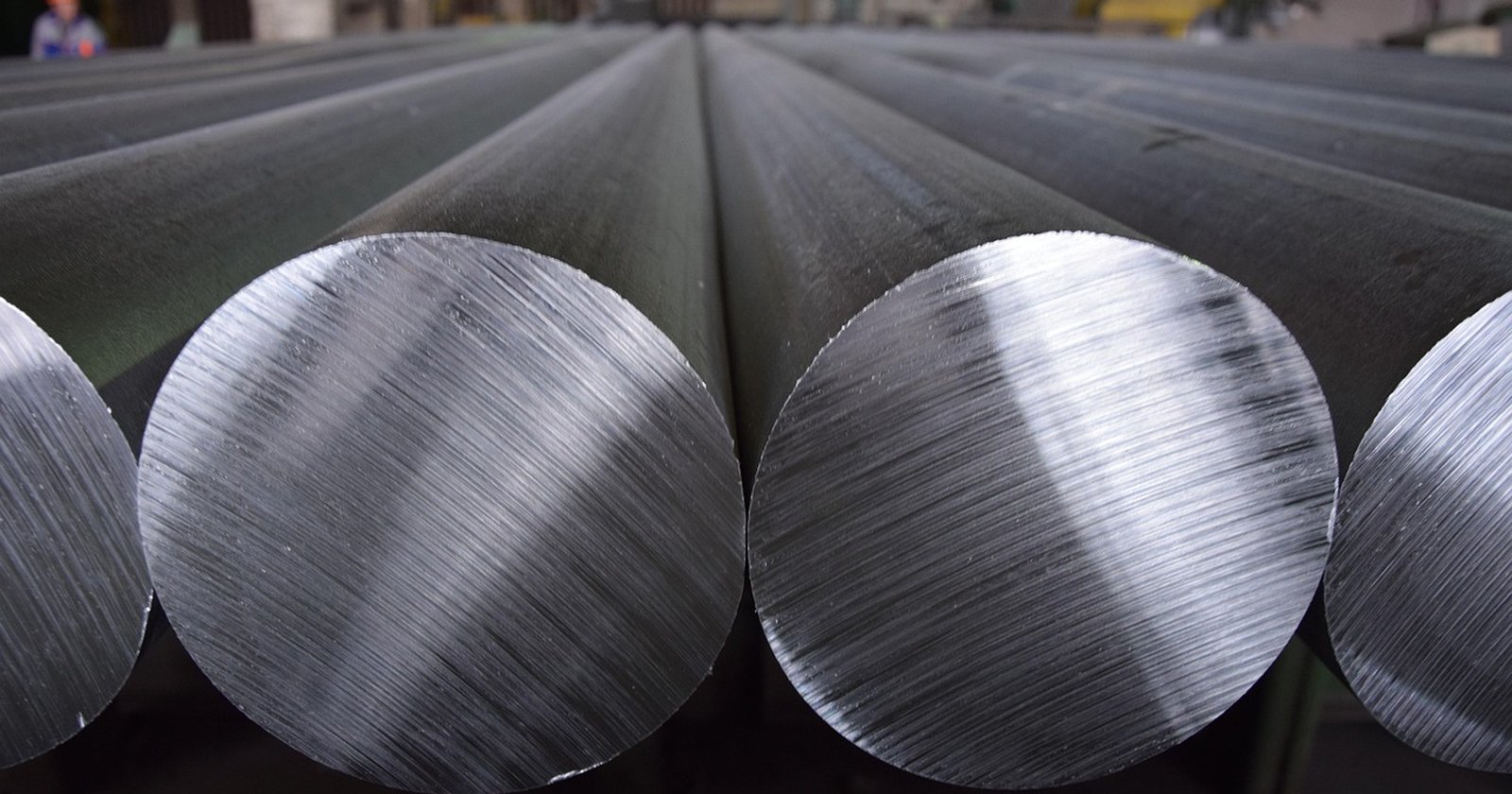
"Aluminium" or "stainless" on a drawing is not enough for a machine shop to quote. Each covers several grades that differ in strength, in how quickly they cut, in how they stand up to corrosion and in price. The grade you name decides what the shop buys, how long the part takes to machine and which finishes suit it. This guide compares the grades most often asked for on UK machined parts and explains how to call them up on the drawing.
6082 aluminium: the general-purpose choice
6082 is the strongest of the common 6000-series aluminium alloys and is widely stocked in the UK as bar and plate. It has largely taken the place of 6061 in UK and European stock, so a US drawing calling for 6061 is often quoted in 6082. Ask before a shop substitutes either way.
In the T6 temper, 6082 plate from 12.5 mm to 100 mm thick has a minimum tensile strength of 295 MPa under BS EN 485-2. It machines well, has good corrosion resistance and can be welded, although welding lowers the strength near the joint. It suits brackets, housings, fixtures, manifolds and most structural parts that do not need the highest strength.
7075 aluminium: when strength comes first
7075 is a zinc-alloyed, high-strength aluminium widely used in aircraft structures. In the T6 and T651 tempers its typical tensile strength is around 540 MPa, well above 6082. It is used for highly stressed parts such as aircraft fittings, gears, shafts, and bicycle and climbing equipment.
The trade-offs:
- It is generally dearer than 6000-series alloys
- Its general corrosion resistance is lower, and it can be prone to stress corrosion cracking in the T6 temper. The T73 tempers give better resistance to stress corrosion, so ask your supplier whether one suits your part
- It is a poor choice for fusion welding, so design 7075 parts to be bolted or bonded rather than welded
Choose 7075 when the stress analysis needs it, not as a default. If 6082 meets the load, it is usually the cheaper and more forgiving part.
Stainless steel: 303, 304 and 316
Stainless steels cut more slowly than aluminium. Their low thermal conductivity concentrates heat at the cutting edge, so they need coolant and more careful feeds, and machining time goes up. The three austenitic grades below cover most machined stainless parts.
303 (1.4305) has added sulphur, which makes it the easiest of the austenitic grades to machine. It is used for heavily machined parts such as fittings, bushes, shafts and fasteners. The sulphur lowers its corrosion resistance below that of 304 and makes it poor for welding.
304 (1.4301) is the most widely used stainless steel. It has good machinability, excellent corrosion resistance in many environments and welds well. 304L (1.4307) is the low-carbon version for heavy welded sections. Chlorides can cause pitting and crevice corrosion.
316 (1.4401) adds 2 to 2.5% molybdenum, which improves resistance to chlorides, so it is the usual choice where salt, cleaning chemicals or food and pharmaceutical processing are involved. 316L (1.4404) is the low-carbon version for welded parts. 316 costs more than 304. It is often called marine grade, but it is not resistant to warm seawater.
Quick comparison
| Grade | Strength | Machining | Corrosion | Welding | Relative cost |
|---|---|---|---|---|---|
| 6082-T6 | Medium | Good | Good | Good, strength reduced at weld | Lower |
| 7075-T6 | High | Good | Lower, watch stress corrosion | Not for fusion welding | Higher |
| 303 | Medium | Best of the stainless grades | Below 304 | Poor | Stainless |
| 304 | Medium | Good, slower than aluminium | Good, not for chlorides | Excellent | Stainless |
| 316 | Medium | Good, slower than aluminium | Better with chlorides | Excellent | Above 304 |
What to put on the drawing
Name the material in full, with the standard designation and the temper or condition. For example:
- EN AW-6082-T6 or EN AW-7075-T651 for aluminium. The T651 temper is stress relieved by stretching, which helps plate stay flat when it is machined
- 1.4305 (303), 1.4301 (304) or 1.4404 (316L) for stainless steel, with the product standard your organisation uses
Then add:
- The finish, such as anodising for aluminium or passivation for stainless, and whether dimensions apply before or after it
- Whether a material certificate is needed. Under EN 10204, a type 3.1 certificate gives test results for the material supplied, signed off by the maker's inspection representative. A type 3.2 certificate is also signed by the buyer's representative or an independent inspector
- Whether substitutes are allowed, such as 6061 for 6082 or 316L for 316
If the part will be anodised for appearance, say so. The alloy affects the colour and evenness of an anodised finish, so ask for a sample before a production run.
Questions to ask your supplier
- Do you stock this grade and temper, or will you buy it in for the job?
- Would a different grade be cheaper to machine and still meet the requirement?
- Can you supply a 3.1 material certificate traceable to the parts?
- Do you anodise or passivate in-house, or through a subcontractor?
- Will the stock size you hold change the price or the lead time?
Quick-reference checklist
- Choose 6082 unless the load calls for 7075
- Use 303 for heavily machined parts that will not be welded or exposed to chlorides
- Use 316 where salt or cleaning chemicals are present
- Write the full designation and temper on the drawing
- State the finish and the material certificate you need
- Say which substitutes are acceptable
Where to go for more
UK metal stockholders publish datasheets for each grade, with the EN standard it is supplied to, and are a good first check on properties and stocked sizes. Our guide to what affects the cost of CNC machining covers the other price drivers, and our guide to choosing a UK CNC machining supplier covers the wider questions to ask.
Find machining companies on CNC Directory
CNC Directory lists 300+ UK machining companies. Browse CNC milling, CNC turning, Swiss machining and finishing and surface treatment, and filter by the materials, finishing and inspection your part needs. Save the companies that fit to your shortlist and send one enquiry to the whole shortlist at once.
For press enquiries about CNC Directory, contact cnc@cncdirectory.co.uk.
Listings related to this article

Bay Engineering Dorset Limited
Weymouth, Dorset
Bay Engineering Dorset Ltd is an ISO 9001-certified precision CNC machining subcontractor in Weymouth, Dorset, trading since 2001. The company provides 3, 4 and 5-axis CNC milling and CNC turning to tolerances of ±0.01mm in aluminium, brass, steel, stainless steel, titanium and engineering plastics, with in-house CMM inspection, assembly and kitting, kanban stockholding, and laser and rotary engraving. Finishing services such as anodising, plating, passivation, bead blasting, powder coating and painting are provided through trusted partners. It serves the marine, defence, motorsport, pharmaceutical and industrial machinery sectors.
- CNC Milling
- CNC Turning
- 5-Axis Machining
- Metal Finishing

Bms Manufacturing Ltd
Norwich, Norfolk
BMS Manufacturing Ltd is a Barford, Norwich subcontract CNC machining company offering in-house CNC milling and turning to tolerances of +/-0.01mm, from prototypes and small batches through to large-scale production. The company works in stainless steel, mild steel, aluminium, brass, copper and engineering plastics, offers CAD/CAM design support and a range of finishing treatments (anodising, plating, passivation), and serves motorsport, automation, electric vehicle and medical clients with material certificates and inspection reports.
- CNC Milling
- CNC Turning
- Design/CAD-CAM

DJJ Precision Engineering Limited
Pontypool, Torfaen
DJJ Precision Engineering Limited is a CNC machining company in Pontypool, Torfaen, and a Tier 1 automotive supplier, certified to ISO 9001:2015 by TÜV Rheinland and registered on JOSCAR. It turns parts from 3 mm to 500 mm in diameter, including Citizen and Star sliding-head work up to 32 mm, and mills on 3-, 4- and 5-axis machining centres to +/-0.01 mm, with automated lights-out cells running 24/7. Broaching, honing, grinding, laser ID marking, assembly and sub-assembly, design and prototype work, CMM inspection and PPAP, ISIR and IMDS documentation are offered, along with anodising, plating, passivation, painting and heat treatment. Customers include automotive, aerospace and defence, medical, marine, rail, oil and gas, power generation and construction firms.
- CNC Milling
- CNC Turning
- 5-Axis Machining
- Swiss Machining

K.L. Giddings Ltd
Cambridge, Cambridgeshire
Precision engineering company in Whittlesford, near Cambridge, established in 1960. Services include 3, 4 and 5-axis CNC milling, CNC turning, wire and spark erosion, welding, assembly, 3D printing and laser part marking, with in-house anodising, electroless nickel plating and other surface finishing. Inspection uses CMM equipment with first article reports. Customers include aerospace, defence, medical, marine, oil and gas and scientific instrumentation companies. ISO 9001 certified.
- CNC Milling
- CNC Turning
- 5-Axis Machining
- Swiss Machining
Penta Precision Engineering Ltd
Fareham, Hampshire
UK CNC machining subcontractor established in 1998 and based in Portchester, Hampshire. Offers 3-, 4- and 5-axis CNC milling and multi-axis CNC turning, plus prototype machining and reverse engineering, in aluminium, stainless steel, titanium, tool steel, brass, bronze, copper and engineering plastics, with anodising, plating and other finishing arranged through UK partners. Supplies aerospace, defence, medical and pharmaceutical, marine, electronics, scientific and OEM customers, typically in batches of 10 to 500 parts. ISO 9001:2015 certified, JOSCAR registered and Cyber Essentials Plus certified.
- CNC Milling
- CNC Turning
- 5-Axis Machining
- Metal Finishing
Tarvin Precision Ltd
Hawarden, Flintshire
Subcontract precision CNC machining and assembly company in Hawarden, Flintshire, with over 30 years' experience in low-volume, high-variety work for aerospace, defence, marine, scientific, medical and automotive customers. Services include CNC milling, turning, 5-axis machining, sub and full assembly and reverse engineering. AS9100D and ISO 9001:2015 certified and JOSCAR registered, with CMM inspection and AS9102 first article reporting.
- CNC Milling
- CNC Turning
- 5-Axis Machining
- Metal Finishing

Universal Fabrications
Nuneaton, Warwickshire
Sheet metal fabrication and precision machining company in Nuneaton, Warwickshire, trading since 1978, offering laser cutting, CNC punching, bending, MIG, TIG, laser and robotic welding, 3-, 4- and 5-axis CNC milling, CNC turning including sliding head lathes, and assembly from a 40,000 sq ft facility. ISO 9001 certified, serving aerospace, defence, automotive, rail, energy and construction customers.
- CNC Milling
- CNC Turning
- 5-Axis Machining
- Swiss Machining